
Description
Need Factory Price or Custom Solution?
Get a instant quotation with product catalog within 24 hours.
Get A Quote Now →What Materials Can Make Organic Fertilizer? A Complete Guide to Raw Materials and Pellet Quality Testing
With the global agricultural shift towards green farming, the demand for high-quality bio-organic fertilizer pellets is booming across Southeast Asia—especially in tropical plantation countries like Indonesia, Vietnam, Thailand, and Malaysia.
For commercial farm owners and fertilizer plant investors, knowing what raw materials can be processed and selecting the right organic fertilizer granulator are the most critical factors for business success.
As a leading machinery manufacturer with 35 years of industrial experience, Taian Hongxin Environmental Protection Equipment (TAHX) brings you this authoritative technical guide.
Part 1: Classification of Organic Fertilizer Raw Materials
Organic waste is not uniform. Depending on the source and industrial processing requirements, an industrial-grade organic fertilizer granulator typically processes raw materials divided into two main commercial categories:
1. Commercial Organic Fertilizer Materials (Industrial & Agro-Processing Waste)
These materials are excellent byproducts from large-scale food processing and industrial plants, offering high volume and consistent supply:
-
Industrial Biowaste: Cassava residue (highly abundant in Thailand and Vietnam), brewery grain/distillers' grains, vinegar residue, sugar mill filter mud, and furfural residue.
-
Marine & Mineral Byproducts: Kelp residue, shell powder, amino acids, and humic acid.
-
Municipal & Plant Ash: River silt, sewage sludge (after proper pathogens treatment), oil cake, and wood ash.
2. Bio-Organic Fertilizer Materials (Agricultural & Livestock Waste)
These are the most common and high-nutrient "main ingredients" used in standard organic fertilizer production lines:
-
Livestock & Poultry Manure: Chicken manure, cow dung, horse manure, and rabbit dung. Processing these requires heavy-duty dewatering machines and compost turners to eliminate pathogens before feeding them into the pelleting system.
-
Agricultural Crop Residues: Straw, soybean meal, cottonseed meal, and mushroom compost substrates.
-
Household Organic Waste: Kitchen waste and food scraps.
Part 2: The Core Role of an Organic Fertilizer Granulator
Once your raw materials are thoroughly fermented and crushed into a fine powder, they cannot be efficiently shipped or applied to large plantations in loose form. This is where an advanced organic fertilizer granulator becomes the heart of your production factory.
Choosing the right pelleting machinery determines the hardness, shape, and commercial value of your final product:
-
New Type Organic Fertilizer Granulator: Perfect for processing livestock manure and sticky bio-waste. It utilizes high-speed rotary mechanical agitation and aerodynamic force to continuously mix, granulate, and densify the powder into uniform spherical pellets.
-
Rotary Drum & Disc Granulator: Highly adaptable industrial machinery used for large-scale compound or organic-inorganic fertilizer plants, ensuring a high pelleting rate and excellent durability.
Part 3: 7 Simple Methods to Test the Quality of Organic Fertilizer Pellets
In the Southeast Asian market, the quality of commercial organic fertilizer varies greatly. Unqualified, unfermented fertilizer will cause seedling burning and destroy crops.
Here are 7 practical field-testing methods recommended by Taian Hongxin (TAHX) to help you distinguish premium pellets produced by a high-end organic fertilizer granulator from inferior products:
① The Water Dissolving Test
Take a glass of water, drop a handful of organic fertilizer pellets inside, crush them, and stir.
-
Premium Pellets: You can clearly see the organic raw materials (like fibers or organic residues) suspended or dissolved evenly.
-
Inferior Pellets: If the mixture quickly separates into distinct layers with heavy sediment at the bottom within a short time, it indicates a high percentage of soil, sand, or cheap mud filler.
② The Odor Test
Smell the fertilizer sample carefully.
-
Premium Fertilizer: High-quality bio-organic fertilizer goes through complete aerobic fermentation and should have a rich, thoroughly decomposed earth smell.
-
Inferior Fertilizer: If it emits a strong ammonia chemical smell, raw foul manure odor, or a septic ditch sludge smell, it is unfermented and unsafe for direct crop application.
③ The Hand-Rubbing Test
Take some fertilizer grains and rub them back and forth between your thumb and index finger.
-
Premium Fertilizer: It should feel smooth or naturally fibrous. If you feel sharp, gritty friction, the fertilizer contains excessive sand or cheap mineral impurities.
④ The Mycelium Breeding Test
Place some organic fertilizer in a cup and sprinkle a little water on it (keep it moist, do not submerge it). Leave it in a warm environment for a few days.
-
Premium Pellets: High-quality fertilizer rich in beneficial microbes will clump together and sprout healthy white mycelium on the surface and inside the broken pellets.
⑤ The Potting Plant Test
Take a potted plant, apply a generous handful of the fertilizer granules directly around the roots, and water it.
-
Premium Pellets: White mycelium will gradually grow on top of the soil, actively boosting plant growth.
-
Inferior Pellets: Unfermented or toxic fertilizer will scorch the roots, causing the plant to wither and die within days.
⑥ The Field Comparison Test
When planting crops, leave a control zone without applying this specific fertilizer batch. A truly high-quality organic fertilizer will show visible, drastic improvements in crop growth speed, final yield, and fruit quality compared to the unfertilized zone.
⑦ Package & Origin Inspection
Check if the packaging is standardized and if the supplier owns their actual manufacturing factory. Be cautious of brands with no raw material source listed. Furthermore, treat purely foreign-packaged "imported" organic fertilizers with skepticism; since organic fertilizer is a localized waste-recycling product, international shipping of raw waste fertilizer is rarely economically viable.
Conclusion: Transform Local Waste into Premium Fertilizer
Whether you choose cassava residue, poultry manure, or crop straw, the key to producing high-value fertilizer pellets lies in selecting robust, industrial-grade composting and granulation machinery.
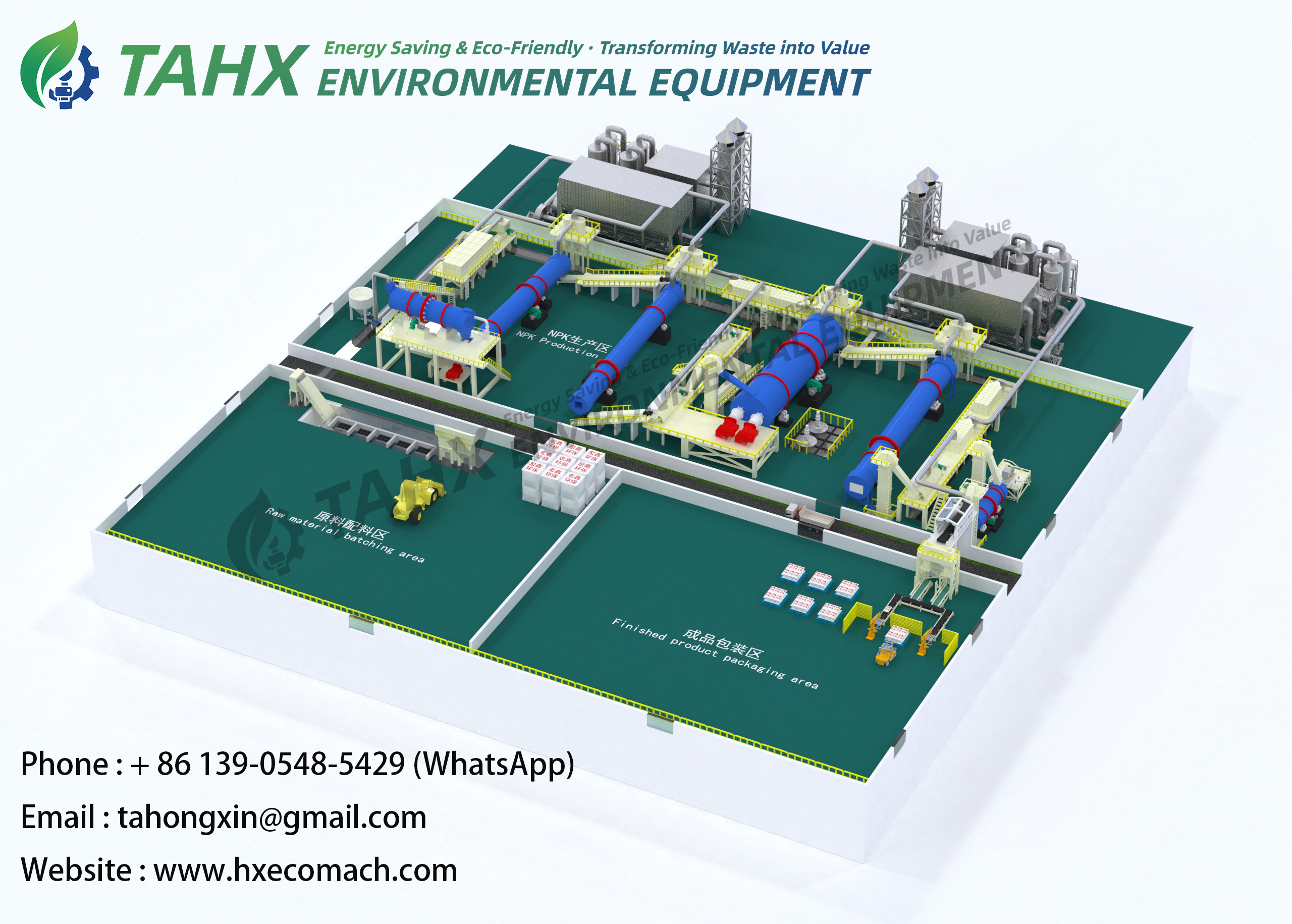
Tai'an Hongxin Environmental Equipment
Reliable Manufacturer of High-Quality Fertilizer Production & Waste Treatment Lines.
Tai'an Hongxin Environmental Equipment:
Supply of High-Quality and Efficient Fertilizer Production Equipment, Straw Processing Equipment, Waste Treatment Equipment and Mining Equipment. If you are looking for fertilizer production equipment and production lines, feel free to contact us at any time.- Whatsapp(Tel): + 86 139-0548-5429( Mr. Li)
- E-mail: tahongxin@gmail.com