
table of contents I. 3 Critical Functions of a Fertilizer CoolerII. Core Working Principles & Machinery TypesIII. Selection Guide & Environmental Protection In commercial organic fertilizer production lines, compound fertilizer production lines, and NPK compound fertilizer production lines, fertilizer granules exiting rotary dryers typically reach high temperatures between 60°C and 120°C. Packaging high-temperature granules directly […]
Description
In commercial organic fertilizer production lines, compound fertilizer production lines, and NPK compound fertilizer production lines, fertilizer granules exiting rotary dryers typically reach high temperatures between 60°C and 120°C. Packaging high-temperature granules directly leads to particle softening, severe caking, moisture condensation inside bags, and coating failure. A fertilizer cooler rapidly lowers particle temperatures to ambient levels while eliminating residual moisture, ensuring optimum product quality and shelf life.
As a leading organic fertilizer equipment manufacturer and compound fertilizer equipment manufacturer, Taian Hongxin Environmental Protection Equipment Co., Ltd. provides complete fertilizer processing machinery—including heavy-duty rotary dryers and coolers—engineered for smooth, dust-free plant operations globally.
I. 3 Critical Functions of a Fertilizer Cooler
-
Rapid Cooling & Anti-Caking Protection: Cools hot granules from 60–120°C down to 30–40°C (near ambient temperature), preventing granule softening, deformation, and adhesion during storage.
-
Moisture Stripping & Granule Hardening: Removes an additional 5%–10% of surface and internal residual moisture during heat exchange, drastically improving particle crush strength to prevent shattering during transport.
-
Ensuring Downstream Coating & Packaging Quality: Cool granule surfaces allow anti-caking agents, waxes, or polymers to adhere uniformly without melting, while preventing internal condensation inside sealed shipping bags.
II. Core Working Principles & Machinery Types
1. Rotary Drum Cooler (Counter-Current Flow) — Industrial Standard
-
Mechanism: Utilizes counter-current thermal exchange inside a gently sloped rotary cylinder (3–8 r/min). Internal lifting flights scoop and cascade hot granules through an incoming stream of ambient air drawn from the discharge end.
-
Advantages: High continuous throughput, robust structural reliability, and ideal for industrial NPK compound fertilizer production lines and large manure compost plants.
2. Vertical Cooler — Compact Footprint Design
-
Mechanism: Hot granules enter from the top of a vertical chamber while ambient air is forced upward through multi-stage baffles.
-
Advantages: Saves valuable floor space and offers fast cooling times; highly suited for heat-sensitive bio-organic fertilizers to protect beneficial microbial flora.
III. Selection Guide & Environmental Protection
-
Material Compatibility: Carbon steel is suitable for standard compound fertilizer granules. For corrosive organic waste (e.g., poultry or pig manure compost), stainless steel interiors are recommended to prevent rust contamination.
-
Dust Collection & Energy Recovery: Exhaust air laden with dust must pass through cyclone separators and wet scrubbers to meet emission standards. Additionally, preheated exhaust air can be ducted to the rotary dryer's burner intake to maximize energy efficiency across the production line.
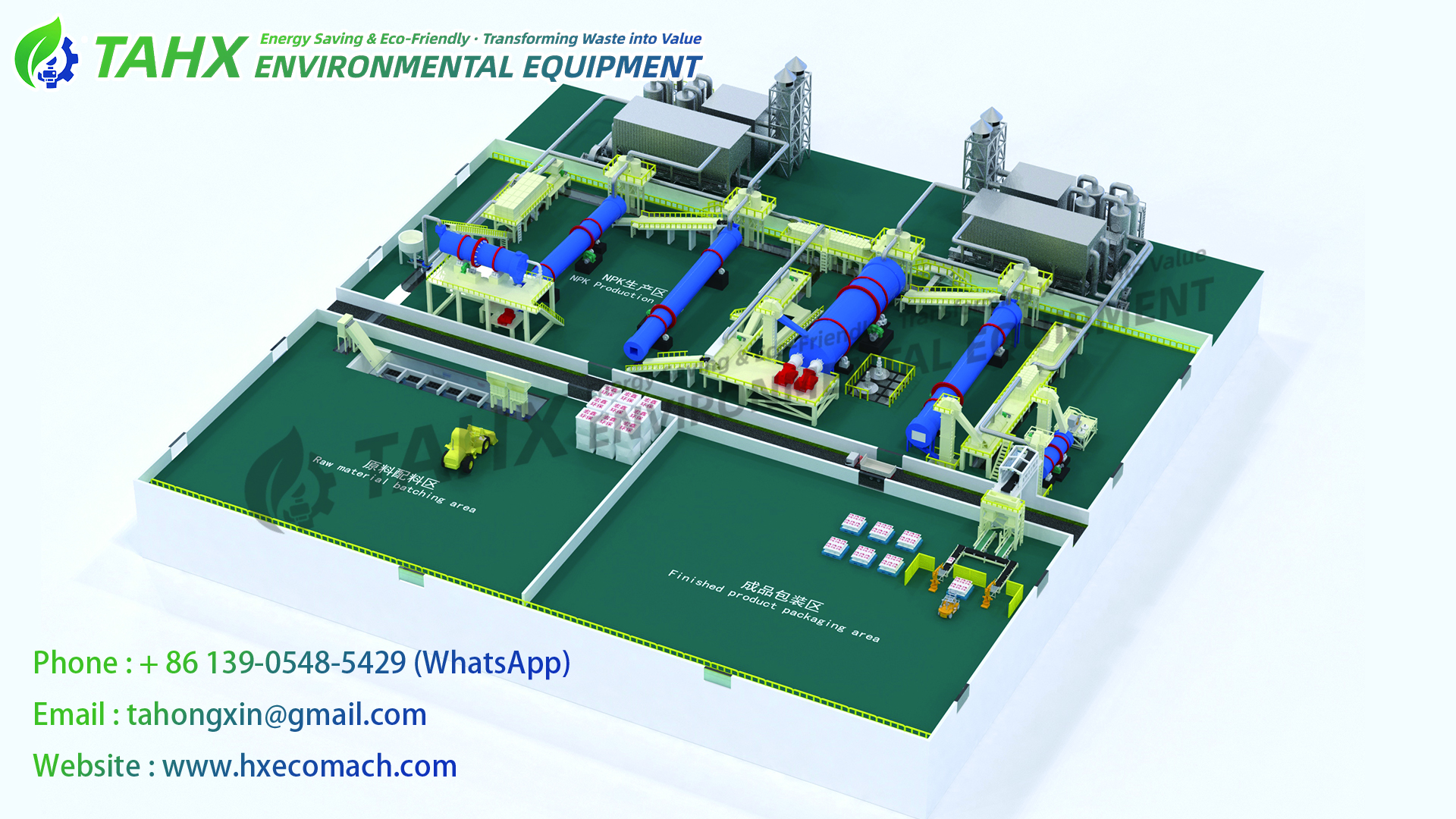
Tai'an Hongxin Environmental:
Supply of High-Quality and Efficient Fertilizer Production Equipment, Straw Processing Equipment, Waste Treatment Equipment and Mining Equipment. If you are looking for fertilizer production equipment and production lines, feel free to contact us at any time.- Whatsapp(Tel): + 86 139-0548-5429( Mr. Li)
- E-mail: tahongxin@gmail.com