table of contents I. Primary Categories & Working Principles of Granulating MachineryII. Integration with Auxiliary Line EquipmentIII. Equipment Selection Guide for Fertilizer Plants In commercial organic fertilizer production lines and NPK compound fertilizer production lines, transforming loose raw powders (such as composted animal manure, humic acid, urea, MAP, and potassium chloride) into uniform, durable spherical […]
Description
In commercial organic fertilizer production lines and NPK compound fertilizer production lines, transforming loose raw powders (such as composted animal manure, humic acid, urea, MAP, and potassium chloride) into uniform, durable spherical or cylindrical granules is the most critical process. Granulation elevates fertilizer market value, eliminates storage caking, and enables automated mechanical field spreading. Fertilizer granulating machinery (also known as fertilizer granulators or granulating equipment) refers to specialized industrial machines engineered to achieve physical powder agglomeration, dry pressure compaction, or molten spray solidification into finished granules.
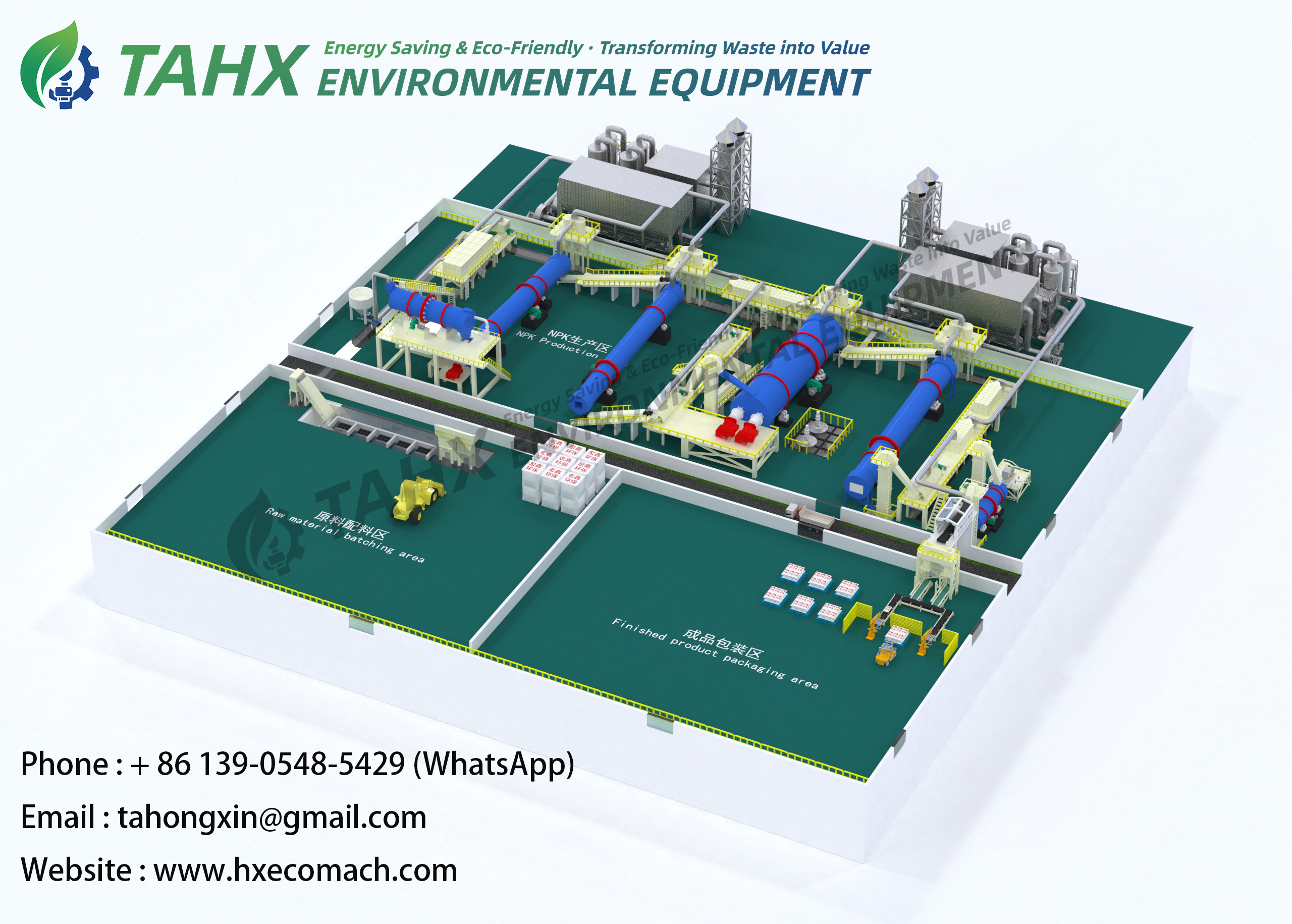
As a leading organic fertilizer equipment manufacturer and compound fertilizer equipment manufacturer, Taian Hongxin Environmental Protection Equipment Co., Ltd. provides complete fertilizer processing machinery—ranging from crushers and batching systems to granulators, rotary dryers, coolers, and automated packaging systems globally.
I. Primary Categories & Working Principles of Granulating Machinery
Based on feedstock properties and moisture dynamics, industrial fertilizer granulators are broadly classified into three main categories:
1. Wet Tumbling Agglomeration Granulators (Wet Process)
-
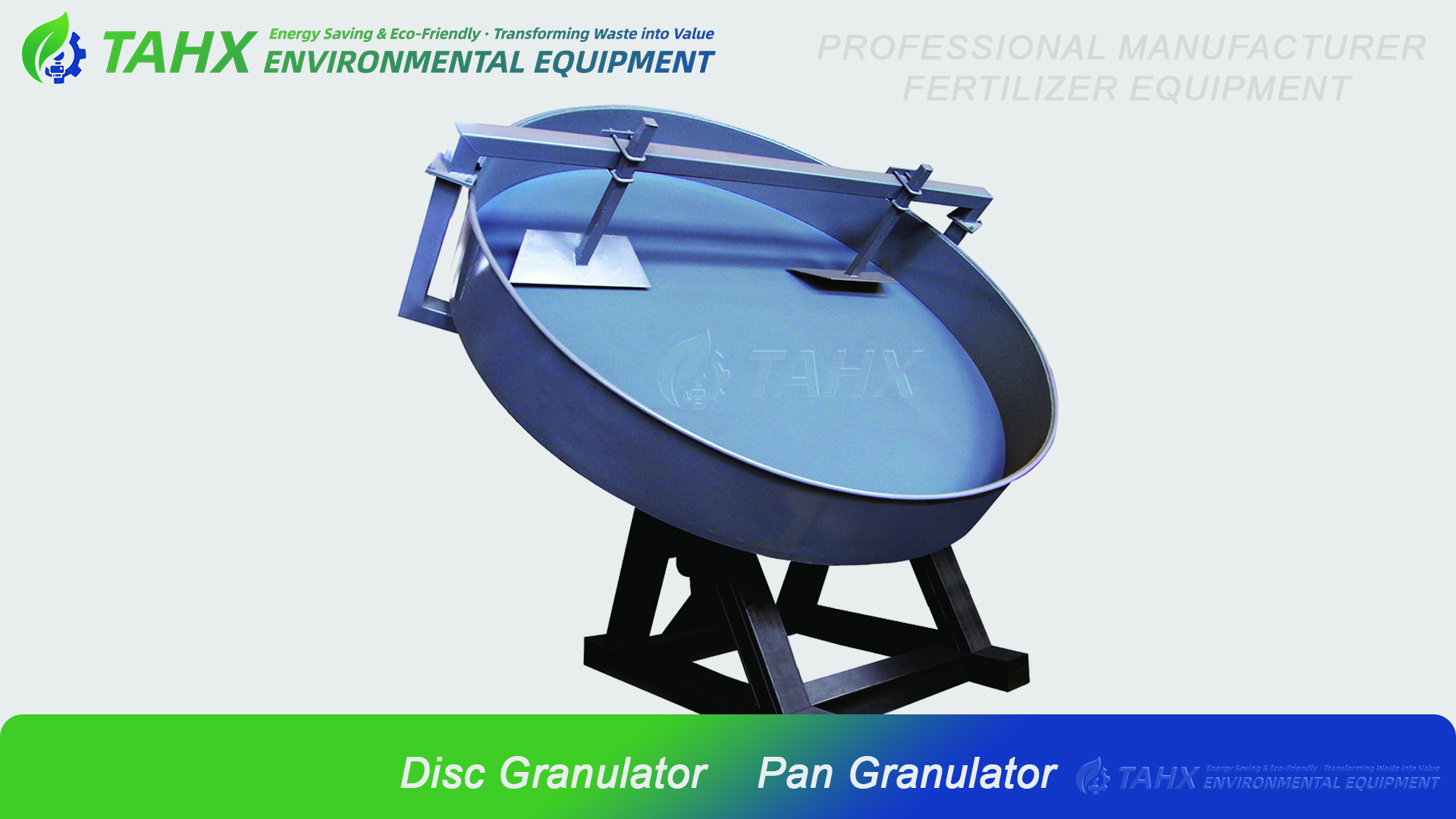
Key Equipment: Disc Granulator (Pan Granulator), Rotary Drum Granulator, Wet-Type Teeth-Grinding Granulator.
-
Working Principle: Utilizes liquid surface tension (water, liquid ammonia, or liquid binders). As the disc or drum rotates, wet powders continuously tumble like a "snowball effect" to aggregate fine dust into smooth spherical granules.
-
Best Applications: Composted manure, bio-organic fertilizers, and NPK blends. The disc granulator achieves a balling rate over $90\%$ with low CapEx, making it ideal for small-to-medium plants.
2. Dry Pressure Compaction Granulators (Dry Process)
-
Key Equipment: Double-Roller Press Granulator, Flat/Ring Die Extruder.
-
Working Principle: Employs high mechanical counter-pressure to squeeze dry or low-moisture powders into dense flakes between twin rollers, which are then crushed into angular granules without liquid binders or drying systems.
-
Best Applications: Moisture-sensitive compounds, pure chemical salts (potassium sulfate, ammonium chloride), and dry-blended fertilizers.
3. Molten Spray Solidification Granulators (Thermal Process)
-
Key Equipment: High-Tower Spray Granulation Towers, Ammoniated Granulation Drums.
-
Working Principle: Melts raw nitrogen feeds (such as urea) into a liquid state and sprays the slurry from top nozzles down a tall cooling tower, forming spherical micro-pellets upon contact with rising cool air.
-
Best Applications: High-capacity, water-soluble, premium NPK compound fertilizer complexes.
II. Integration with Auxiliary Line Equipment
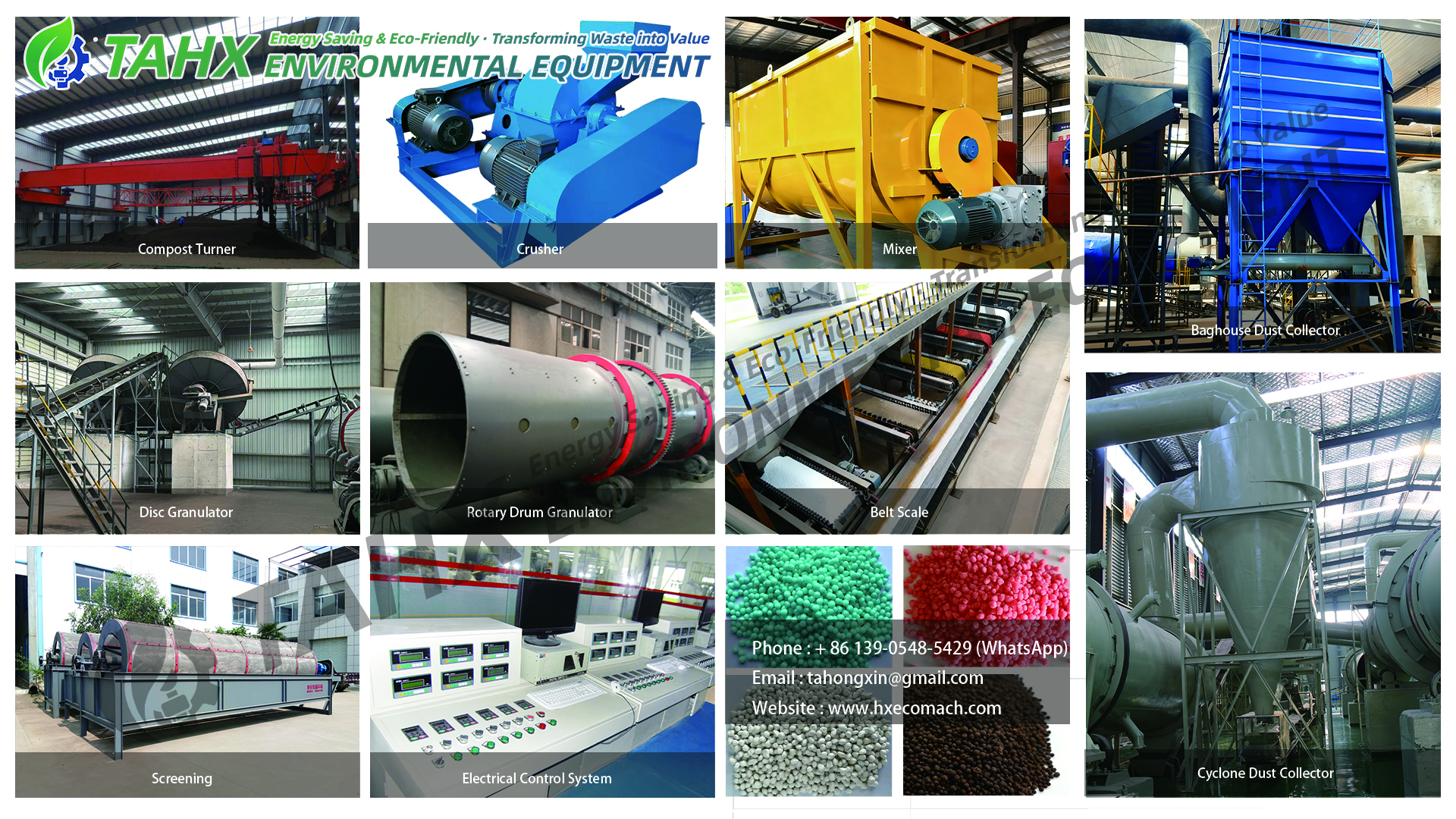
To maximize output quality, granulating machinery operates in synergy with specialized line auxiliaries:
-
Pre-Grinding: Feedstock is pulverized down to $\le 3\text{ mm}$ using a non-clogging two-stage crusher to ensure uniform particle binding.
-
Post-Shaping & Cooling: Moisture in fresh granules is evaporated in a rotary dryer before entering a fertilizer cooler (counter-current rotary type) to lower particle temperatures to 30–40°C, increasing crush strength and preventing storage caking.
-
Air Pollution Control: Exhaust points across granulating and screening nodes connect to a pulse jet dust collector, recovering fine particulate dust directly back into the granulator.
III. Equipment Selection Guide for Fertilizer Plants
-
Match Feedstock Physics: Select disc granulators or rotary drums for moist organic compost; choose roller press extruders for moisture-sensitive chemical salts.
-
Scale & Capacity Matching: Select disc or extrusion units for 10,000–50,000 t/a capacity; opt for rotary drum or high-tower systems for 100,000–500,000 t/a industrial lines.
-
Corrosion Resistance: Ensure material contact surfaces feature stainless steel or heavy-duty anti-corrosion polymer liners when handling acidic composts or corrosive salt blends.
Tai'an Hongxin Environmental:
Supply of High-Quality and Efficient Fertilizer Production Equipment, Straw Processing Equipment, Waste Treatment Equipment and Mining Equipment. If you are looking for fertilizer production equipment and production lines, feel free to contact us at any time.- Whatsapp(Tel): + 86 139-0548-5429( Mr. Li)
- E-mail: tahongxin@gmail.com